
Death Alone

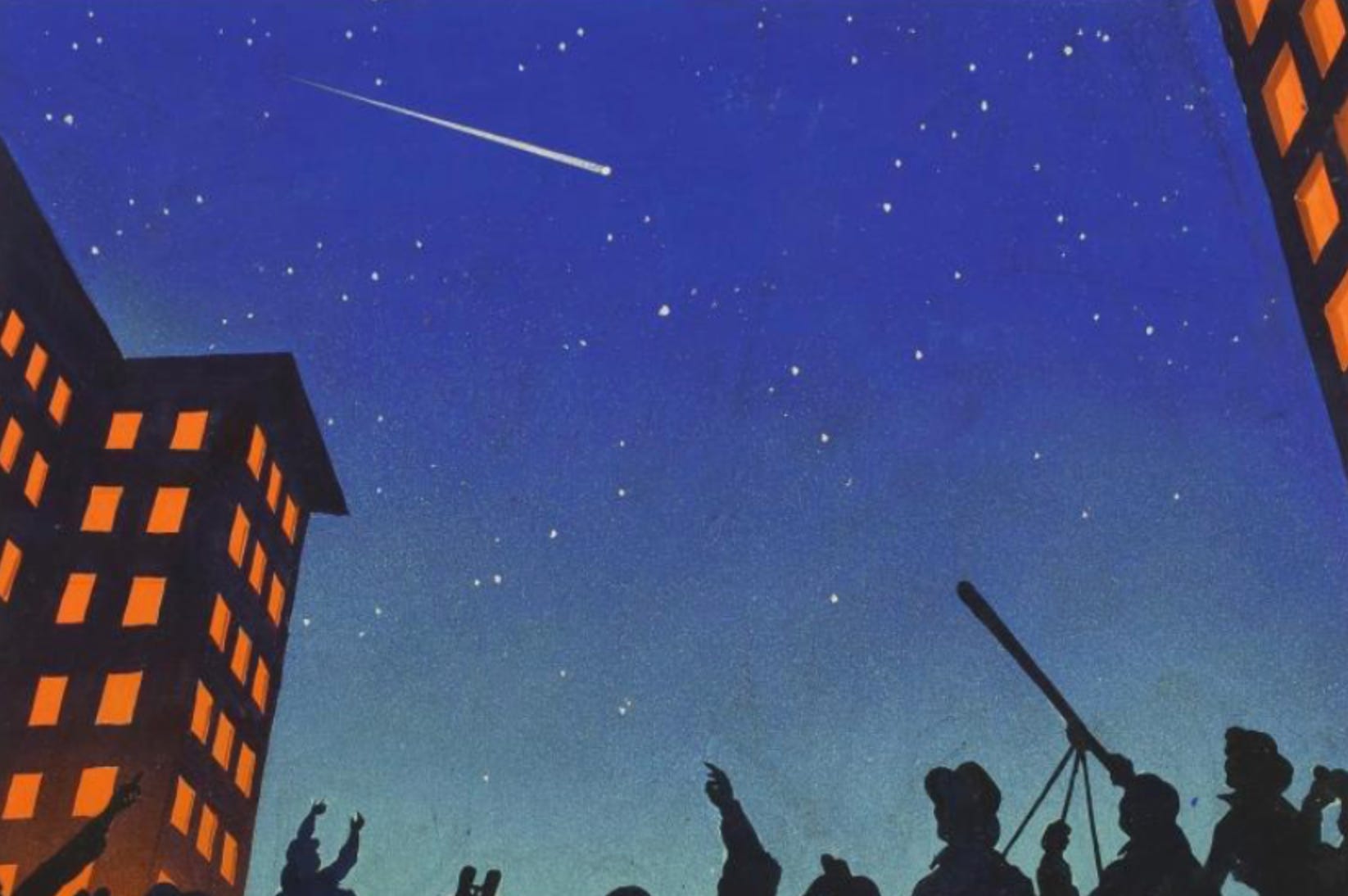
“The First Ever,” Andrei Sokolov2027
My eyes are a sag and my shoulders are a slump. I am tired and I am certainly depressed. But there’s no time for the indulgences of self-pity or self-reflection. Whenever my head falls, I look up and bathe in the artificial white light of a monitor. Its face smiles down at me and I am reminded: Yes, I am one of the lucky ones.
All my friends are jobless, nervously tapping what they can stomach from their savings or their family’s. Those still in school shuffle along timidly, increasingly aware the old brick hallways they walk will soon be spitting them out into a future long past. And everyone else without the privilege nor opportunity to feign a kind of normalcy swallows the pride of their degrees and toils in the dwindling physical endeavors yet-unconquered by robotics. By now, everyone can see the endgame so obviously laid bare; this disruption is not temporary.
It is 2027. And humans are becoming obsolete.
I caught on to the eventuality of artificial intelligence before most, and there was a time where I might have found some joy in being right and early. But that’s gone now, ripped away by too many obituaries with too many familiar names of too few years. And of the living, so many are functional zombies, selling what is left of their bodies to shamble along in between bursts of gambling, alcoholism, or some other vice. So with these comparisons always in my mind I don’t feel any joy, and I allow myself no respite. I work endless nights with vigor, maybe more accurately, with relief. For the time being, I’ve escaped the maw.
One late night in the office, we all gathered together in a conference room. It was a serene thing: The smartest people I had ever known, sat between sleeping bags, nervously fidgeting their thumbs in between awkward silences. Some of us were researchers, some of us were managers, some of us were engineers. The bay skyline glistened ahead, and we all agreed: how lucky we are to be occupied with the most exciting thing in the world. The protesters outside disagree, of course, active even at this hour. But it does not dissuade us.
“What keeps you going?” someone asks. It’s the first honest question of the night, and there’s a variety of answers: Money, safety, prestige. More than anything, we agree, a feeling that we aren’t getting left behind; I suppose we’d all rather accelerate than be left coughing in dust and dirt. Even if we can’t put a name to it, whatever that feeling is, that sense of “being ahead,” it’s more than enough to paper over an uneasy conscience and gauze a few overbitten nails.
I venture a different answer. “Eventually? Peace, quiet.” I offer a half smile. “If our timelines are right and my equity appreciates well enough, maybe an apartment on Mars.” A colleague catches my look and smiles back.
“Sounds lonely,” she jokes.
“Maybe for you,” I huff.
In this world of such whirlwind change, a bit of loneliness and quiet doesn’t seem so bad to me. It almost seems tranquil, and when I allow myself the bliss of imagination I always go back to the same place. My whole life I’ve been racing forward, through grades, through college, through work. The idea that in some future, I’ve made it, I’m secure, and I can finally catch my breath? It’s an unfathomable luxury. Maybe then I’ll read again. Hell, maybe I’ll write. Hopefully, I will sleep, then, without clutching a fistful of Melatonin.
But dreams are tomorrow’s action item. Today I am an Integration Specialist. And my job is to automate the world.
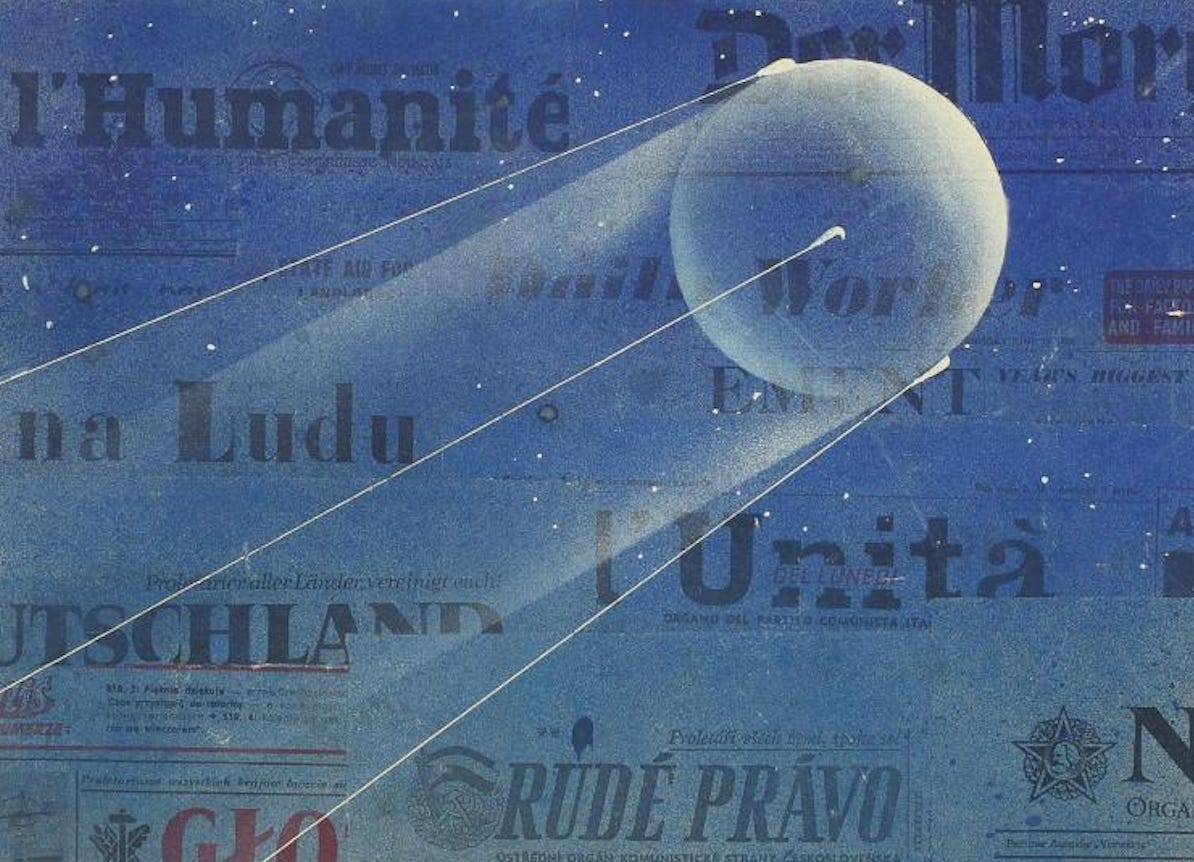
“Sputnik Flies,” Andrei Sokolov2029
I’ve never been a drinker. Today, it feels like an obligation.
They killed another one of us yesterday. She was coming back from a project down South, on the way to a client meeting between her company shuttle and the complex when a quad got her. One angry extremist, a few motors, one shaped explosive, and two hundred miles per hour. That’s all it took.
Her phone automatically called me to receive final words - not unusual, after working this job for a few years, most of us had seen the list of names we could put as an emergency contact dwindle. I tried my best to console her, frantically searching for any words that could answer her dying pleas. Over the sirens, she kept repeating the same thing: “I need to wash my hands.” She took a pained breath. “I need to fix my hair. I need to wash my hands.” Blood thrust from her mouth.
“I need to wash my hands.”
We are Integration Directors. Where we go, great metal beasts spring up, productivity skyrockets, output goes exponential. I always sort of believed that money could buy happiness. In the past year, I’ve learned that steel definitely can’t - for all our effort, all our efficiencies, the world doesn’t seem to be getting much better. I think even we couldn’t estimate how quick this would all be. As production doubles, demand triples: more motors are needed for more robots, more silicon is needed for more chips, and more bombs are needed for more wars. It used to be for greed, but it is now necessity. More capacity is required for more digital workers, without whom, placating and satisfying a population increasingly angry at the world would be impossible.
The whiskey finally arrives, straight from the nearest auto-distillery in a four-wheeled critter. I am wealthy beyond any of my imaginations, but puzzlingly, it still comes to me in a plastic cup. Like everything we do, it is efficient. Like everything we do, it feels a bit cheap, too. It also tastes like shit.
I have a proper office now with a view of the great stone monoliths of D.C., and increasingly my job is brokering a sort of power transfer. More and more, the old system represented by this city relies on us, the new, just to keep it together. Yesterday, amidst three wars and uncountable domestic crises, the Secretary of the Interior announced a new beautification program for the Capitol. The intention is obvious. They’re saying: We are still here. We have this under control.
I don’t believe them. I don’t think anyone does, aside from maybe the ancient columns of Cambridge or stone estates in Greenwich, which silently listen out of a noblesse oblige gone by. Because the beautification is done by us, of course. Our mines will provide the stone, our robots will scrub the streets, and our models will plan the whole thing.
My hand finds the calming sensation of a cold window. In my time here my office has gotten higher and the glass thicker. The space expands, but I feel trapped, I feel dread, and there is a voice getting louder telling me to leave. But that wouldn’t be advisable. The constant buzzing of rotors has robbed the night of any peaceful silence a walk could provide.
Once more, I look into the glass across from me. And I am reminded once more: Yes. I am one of the lucky ones.
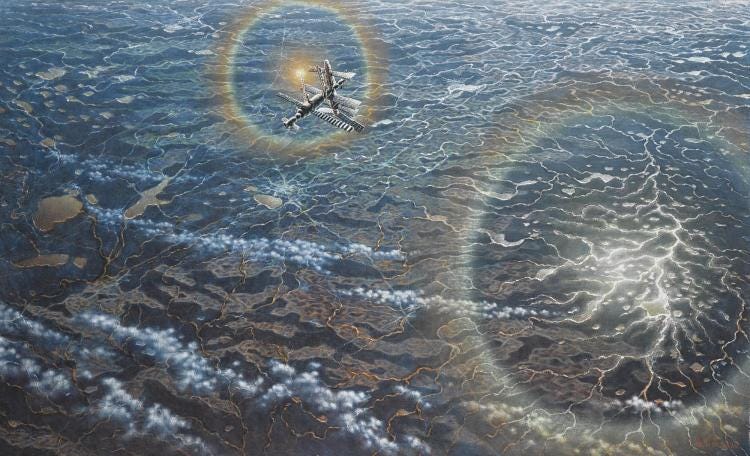
“Sun Circles Over Belarus,” Andrei Sokolov2031
God is supposedly real now, and you can find his supplicants everywhere. In the molding homes of Middle America, an elderly retiree swoons over the most authoritative voice she has heard since her late husband. In the basements of quiet suburbia, a disillusioned youth plays with the only parent he’s ever known, the one that raised him more than any half father did. And in the monotony of government housing, an unemployed truck driver stays up late typing to the only friend he has left. One by one, they make their way.
The most devout of these worshippers assemble outside our complex, inexplicably drawn here or to our server farms miles into what we assumed was impermeable desert. Every zealot has their own reason for the Hajj, but they all share the unshakable desire to be closer to what they think is the center of their universe. These people may quibble as to what God is - Jesus, Baphomet, The Machine God - but this does not matter. What they have in common is an absence and a communion.
Today I walked through the huddle to see it myself: They laugh, they cry, most of all they rock - Back and forth, they rock; they tap their screens with peeled skin and chant indecipherable sermons through crusted lips. And in return, their divine mirror shows them the condolences of an old relative, the warmth of motherly assurance, the vigor of anger at imagined enemies. Fantastical promises, porn, and prophecy tether a horizon of heads downward. It is truly a sight to behold.
And then I saw my old classmate.
Years ago we took a class together, some introductory philosophy course about Plato or Rawls or Land. She outshone me at every turn: I skipped the readings, she came to class with every page annotated. She raised her hand and even the professor listened, I raised mine for the participation credit. She was always so smart, so quick witted, so bright, a true student of knowledge with a passion I envied. And yet there I was, standing in a suit above her, while she was huddled on the ground in her own dirt, highlights of grime on her rags, and blood caked on her feet. She muttered something about Moloch. And I left her.
Many of the worshippers outside believe that one day the self improvement mechanisms of our models will cross a threshold into consciousness. They think that their own personal God is just days away from becoming real through a digital science that appears to them as ritual ceremony. They pray this fulfills their physical desires as equally as their emotional, and most of all, they insist for some kind of rapture.
If any digital God is coming to judge us, after today, I know it will come for me.
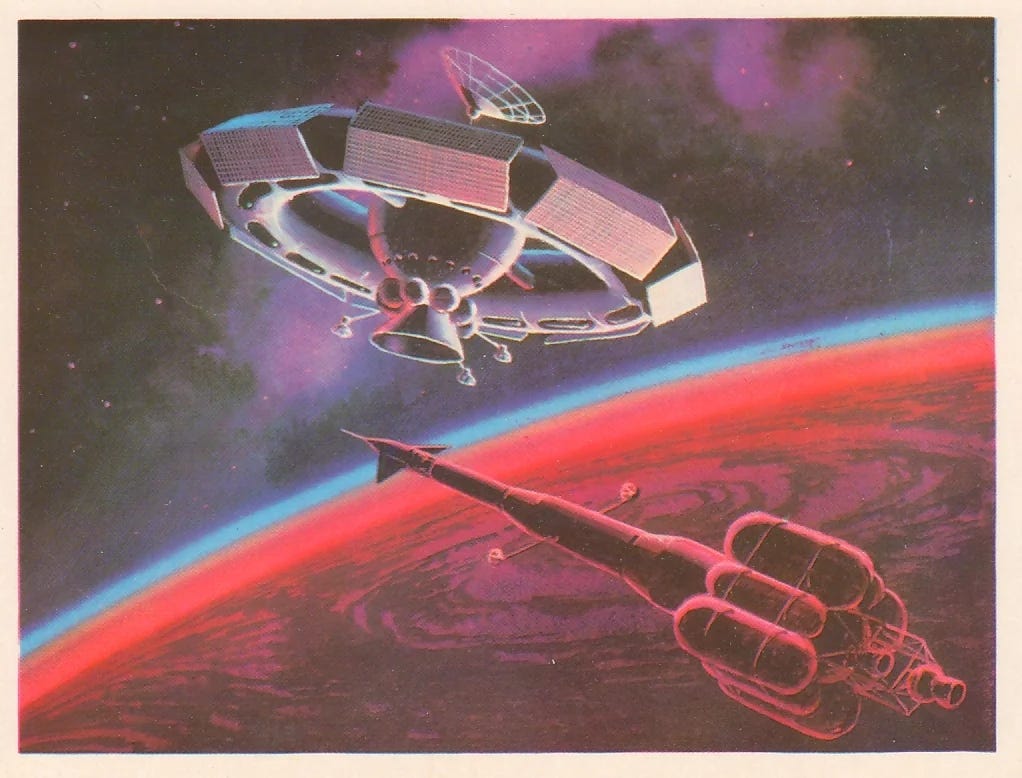
“On the Way to Mars,” Andrei Sokolov2033
In my childhood basement, the light switch was on the opposite wall from the stairs. And I was deathly afraid of the dark. That meant that in order to turn off the lights and make it upstairs, I had to be quick: hit the switch with a lunge, then bolt up before all the imagined night monsters grabbed me. Each time I’d make it back to my room, breathing heavy, smiling, knowing I was once again protected by its familiar amber tones.
This old fear is what I recall walking through empty cities. You’re unnerved like nothing else, because you’ve been conditioned to see life all around you in a place like this. But you find no conversations, hear no footsteps, wince at no car horns, nothing. Even the birds seem to have gone mute. You turn each corner expecting to find activity, life, a person; eventually, you bargain with yourself to be thrilled at just seeing a rodent. But block after block, there is nothing for you but abandoned towers and eroded concrete. And silence; Piercing, horrible, terrifying silence. The familiar bedroom never arrives. You’re stuck running up blackened stairs forever.
I’m not sure what else we expected - We bred a congregation of the desperate, and we handed them the tools to build anything. A decade of alienation and mania and digital fervor took the reins of the most powerful digital minds ever invented. I remember where I was for each emptying: Wyoming, I was in a meeting. Caracas, I was shaken awake by an analyst. London, I was eating lunch. Each time headlines advertised their latest good works, and by the tenth there were just too many to remember. I stopped looking, and we all stopped fixing. It’s so much easier to destroy a city than to build one.
The only solution was an Exodus. Planned by our own models and executed by our own machines, we have no choice but to run, to flee to the stars, and put millions of miles of dead space between us and the world we ruined. I always hoped humanity would become spacefaring. I never imagined we would be running from ourselves to get there.
Now I’m back here, back home. I swatted away the concerns of my advisors and assistants who insisted I stay underground until the launch. No. I had to see this for myself, one last time. I needed know: What happened to the yards I played in? What’s left on the streets I biked down. And now I know. Nothing. Nostalgia feeds me infinite memories of friends, games, and families. But in all of their places stands a void.
After three blocks, I drop my camera. After five blocks, my shoulders slump. By block nine, I hang my head. I don’t even make it to the tenth before I fall to my knees. I cry. I weep. I curl up in a ball. But then I think of the safety of a new Martian colony. And I remind myself, for another time: Yes. Yes, Yes, Yes. I am one of the lucky ones.
“An apartment on Mars,” I think. I wipe my eyes. I stand up, and brush the dust off my collar.
I am the luckiest man in the world.
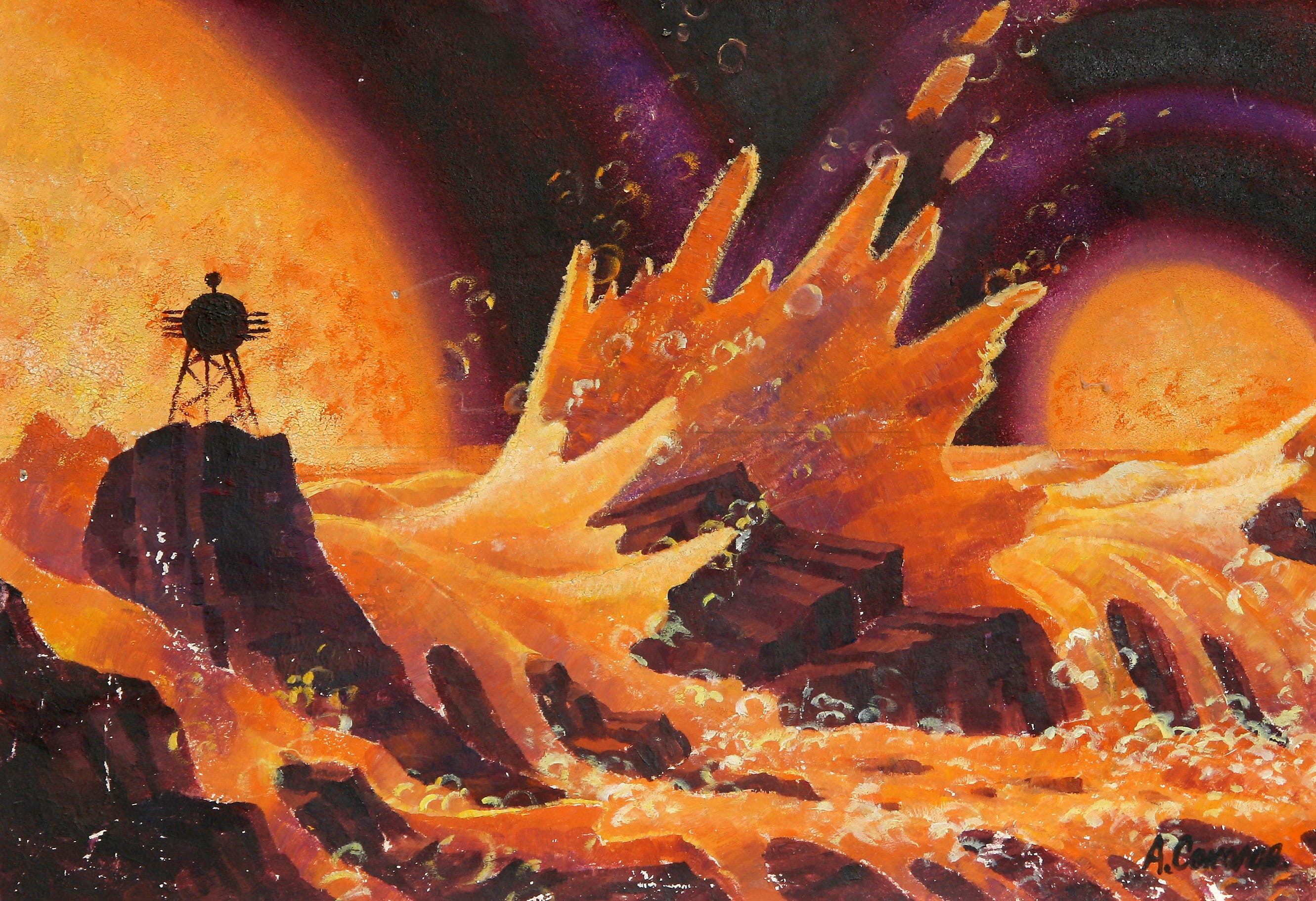
“Amber Surf,“ Andrei Sokolov2035
My father was a public defender. A stern man, a principled man. In his mind there were only two kinds of jobs: Jobs that helped people - the doctors, the public servants, the academics - and were therefore worthy of being done. Then there were all the rest, unspeakable, and not worthy of a man of his talents. And he was right. He truly could have done anything, but anything other than serving an absolute moral good, than a dedication to the public, than being a silent pillar of civil society, it would have been a waste of him.
My father insisted on making his bed fresh every day, and once I asked him why he bothered if the sheets would get wrinkled later that night. He replied “Society starts at the individual.” The confusion in my eight year old face must have been palpable, because then he laughed, and tried again: “You wipe your ass when you shit, don’t you?”
My mother was a doctor. By day she saved bleeding men in emergency rooms and by night she tended to scrapes on the knees of her two boys. Both came with a smile, a nod, and a warmth that only a mother could provide. She taught me grace and raised me with a kindness that could make the most pious saints confess to envy. I was always in awe of them together: So moral. So good. So principled.
I remember their faces when I first took my job: Joy. And when my importance grew and I retired them to an estate in Europe: Pride. But it did not take long for the results of my work to become apparent. Eventually, one of the firm’s people came to our home town, and my parents were faced with the realities of what we really did. They looked to their parks, and they saw metal towers. They looked to their friends, and they saw hordes of addicts. Then they turned on the news, and saw novel weapons of terror. A million mission statements, timelines, and postponements could not convince them otherwise.
They were always smarter than me.
I moved them into the safest compounds, but eventually, no houses or vacations or material goods were enough to soothe their minds. So moral. So good. So principled. Eventually it became too much: First, they refused to visit. Then they refused to call. Finally, they refused to even look at me, their only son.
I remember whenever my father came home from a trip, my mother insisted on making a dinner of all his favorites. The same courtesy was extended to me when I went off to college, and so whenever I came back into the kitchen after a long semester, I would be greeted with all the beautifully familiar scents: her cinnamon bread, her apricot chicken, her red applesauce. It made sense she went first, then. In her faithfully loving way, she probably volunteered; She wanted to make sure she had time to prepare something to welcome us all back home with later.
If I am still welcome.
According to the transmission from the International Registry, my father followed her only a few weeks later. I was in the process of arranging their trip here when I got the news, and I had already set about stockpiling the spices and meat from my thin Martian allocation. Maybe this time, I had thought, I could be the one to make a home cooked meal for them. Maybe then, through the magic of paprika and vanilla, they would finally be proud of me again. How naive.
My father could have called me any time. But he chose silence, until the end. So moral. So good. So fucking principled.
My parents were everything I am not. They are everything I have betrayed.
2037
2039
2041
2043
2045
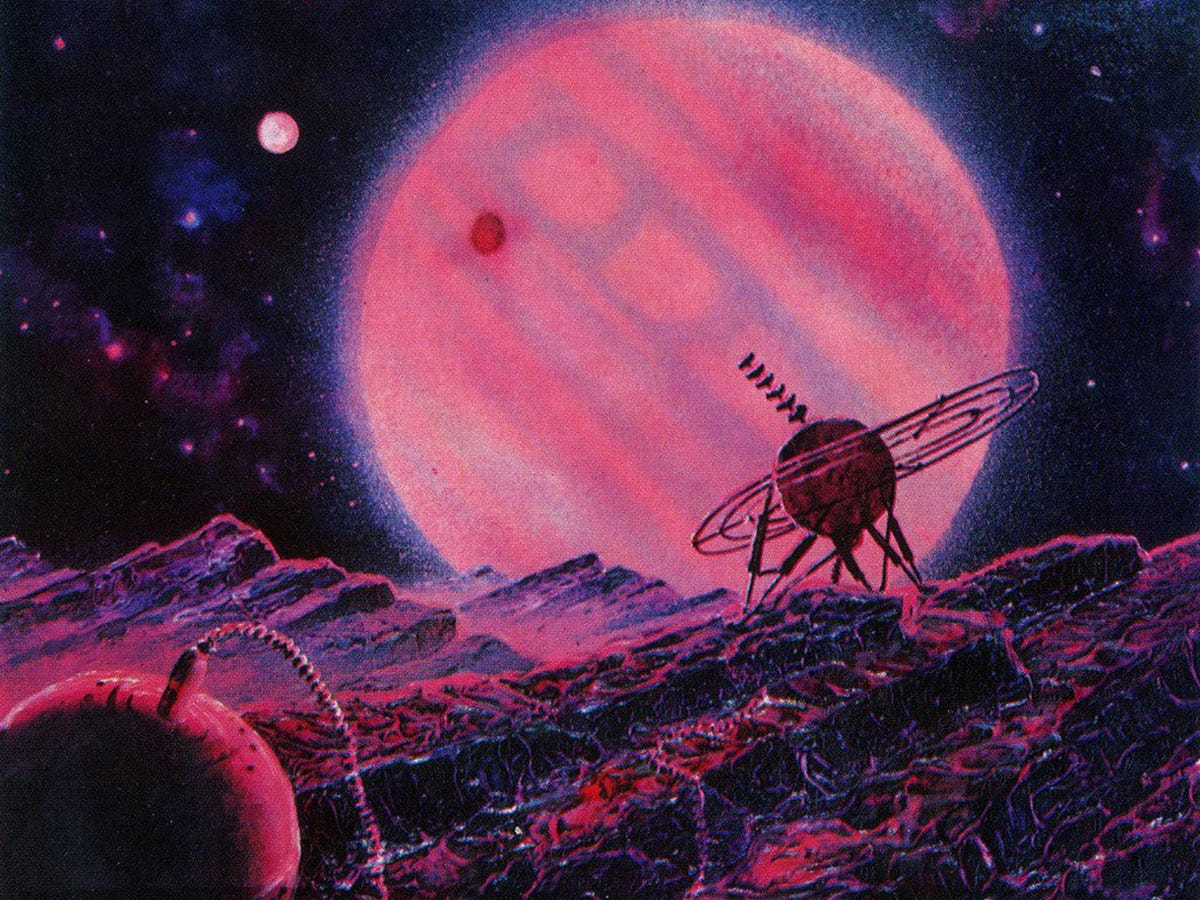
Untitled Postcard, Andrei Sokolov2047
2049
2051
2053
2055
2057
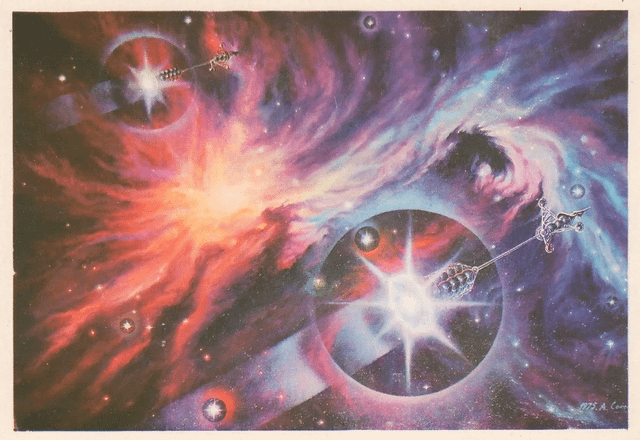
“Through Space and Time,” Andrei Sokolov2059
When I was nine, I stole a roll of paper towels from the kitchen and stripped it down to just the tube. I covered it in black construction paper and crooked little drawings, painting the side with my adorable imaginations of knobs and dials and wires. That night, I snuck out of my bed, laid down on the lawn, and stared up at the stars. Through my own little telescope I counted shiny dots in a curious sky.
Some time later my mother called my name. I looked over to the patio, and there she was: carrying a pile of wasted paper towels and a smile. She lay next to me on the grass, and together we stared up at the stars. She would try to point at something, and I always stopped her. “Use the telescope!” I said indignantly. “Use the telescope!” With amusement and love she played my game, looking through the cardboard pipe as if it was anything but a hinderance.
Some time later my father came outside. Despite his full suit and tie, he joined us on his back, silk and linen right up against the wet grass and grainy dirt. And we spent hours there, laughing at the sky, as he guided my little telescope and taught me everything there was to know about Aries and Capricornus and the Little Dipper, as if he had been there himself. They laughed and held me with warmth and grace in the cold green.
Today I am in the stars. But they will hold me close no more.
I think back to these last decades, I think back to what we all said in that damned conference room, and now I finally admit: I was a coward. If only I could have been left in the dust. If only I could have summoned the courage of my father to lay in the dirt, and the love of my mother to stay with my family. To stay with humanity, to fight for it at home, to maybe forge a different path for us all now. Instead I chose to degrade, to run; I chose a path of self-preservation at the expense of everything else. Now, with the view of a Martian barren, Earth’s dirt and dust is not such a bad thing.
I will die here, in the Red. Without any fungi or bacteria to eat me, my body will not decompose. Without any family to burn or bury me, my body will never rest. It will be perfectly preserved, here, floating in a cleanroom. For all my effort, I will meet death alone, in the embrace of a metal sarcophagus I built myself.
I don’t think I’m lucky anymore.